
Psyllium
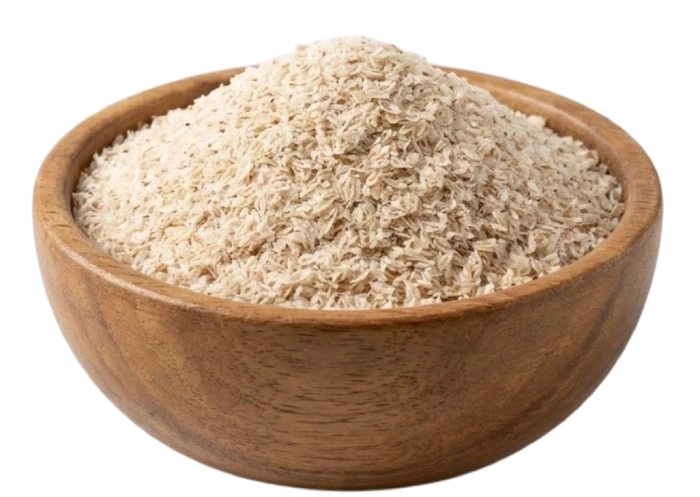
Psyllium Husk is a natural soluble fiber obtained from the outer husk of Plantago ovata seeds through a carefully controlled cleaning and processing method. Widely known as Isabgol or Ispaghula Husk, it is valued for its exceptional water absorption and gel-forming capabilities.
Rich in dietary fiber, Psyllium Husk can absorb several times its weight in water, making it an ideal ingredient for applications requiring thickening, binding, and moisture retention. Its natural origin and functional properties have made it a preferred choice across food, pharmaceutical, nutraceutical, and health industries.
Psyllium Husk is a cost-effective and versatile ingredient that contributes to improved texture, enhanced fiber content, and overall product performance. Owing to its excellent functionality and health benefits, it has gained worldwide recognition as a premium ingredient for modern food and wellness applications.
Properties
Key Properties of Psyllium Husk:
- Exceptional Water Absorption Capacity: Absorbs several times its own weight in water, forming a viscous gel that enhances texture and consistency.
- High Dietary Fiber Content: Rich in natural soluble fiber, making it ideal for fiber enrichment and digestive health applications.
- Excellent Binding Properties: Improves product structure and serves as an effective natural binder in various formulations.
- Superior Moisture Retention: Helps maintain freshness and prevents moisture loss in food products.
- Texture Enhancement: Improves mouthfeel, softness, and overall product quality in bakery and processed food applications.
- Natural Thickening and Stabilizing Ability: Provides stability and viscosity in liquid and semi-solid formulations.
- Gluten-Free and Plant-Based: Suitable for clean-label, vegan, and gluten-free products.
- Sustainable Natural Source: Derived from renewable plant resources and processed with minimal environmental impact.
- Wide Industrial Applications: An ideal ingredient for food products, dietary supplements, pharmaceuticals, functional foods, bakery applications, and various health and wellness formulations.
Agricultural Regions
India is the world’s leading producer of Psyllium (Plantago ovata) and accounts for the majority of global psyllium cultivation. The crop is primarily grown in the western regions of the country, with Gujarat and Rajasthan being the principal producing states.
Psyllium thrives in light, well-drained sandy soils and performs best under dry and moderate climatic conditions. Favorable weather, fertile soil, and established farming practices enable growers to achieve consistent yields and maintain high-quality standards.
The ideal agro-climatic conditions and extensive cultivation expertise have positioned India as a reliable source of premium-quality Psyllium Husk and Psyllium-based products for food, pharmaceutical, and nutraceutical industries worldwide.
Nature and Processing of Psyllium Husk
Psyllium seeds are small, oval-shaped, and light brown in color with a mild natural odor. The most valuable component of the seed is its outer husk, which is carefully separated through advanced cleaning and milling processes to produce high-quality Psyllium Husk.
The extraction process involves removing the husk from the seed through specialized processing techniques while preserving its natural soluble fiber content. The resulting product possesses excellent water absorption and gel-forming properties, making it suitable for a wide range of food, pharmaceutical, and nutraceutical applications.
Strict processing and quality control measures ensure that Psyllium Husk retains its purity, consistency, and functional characteristics. This efficient processing method enables the production of premium-grade Psyllium Husk with reliable performance across various industries.
Note: The actual yield and quality may vary depending on seed variety, growing conditions, and processing methods.
Manufacturing Excellence and Quality Assurance
The production of premium-quality Psyllium Husk begins with the careful selection of superior psyllium seeds and the use of advanced processing technologies. Our state-of-the-art manufacturing facilities are equipped with modern machinery and efficient processing systems that enable us to consistently deliver high-grade Psyllium Husk to meet the growing demands of global markets.
We follow stringent manufacturing practices to preserve the natural fiber content and functional properties of psyllium while maintaining the highest standards of hygiene and product integrity. Every stage of production, from raw material selection and cleaning to dehusking, processing, and final packaging, is closely monitored to ensure contamination-free operations and consistent product quality.
Our dedicated quality assurance team conducts comprehensive testing throughout the manufacturing process to ensure compliance with international quality standards. Key quality parameters evaluated include:
Key quality parameters evaluated include:
- Moisture Content
- Purity
- Swelling Index
- Mesh Size / Particle Size
- Color and Odor
- Bulk Density
- Fiber Content
- Ash Content
- Acid Insoluble Ash
- pH Value
- Foreign Matter
- Heavy Metals
- Arsenic and Lead Levels
In addition, our Food Grade Psyllium Husk undergoes rigorous microbiological testing to ensure product safety and purity. These tests include:
- Standard Plate Count (SPC)
- Yeast and Mould Count
- Salmonella
- Escherichia coli (E. coli)
- Coliforms
- Staphylococcus Species
Through strict quality assurance procedures and continuous process monitoring, we deliver Psyllium Husk products that meet the highest standards of purity, safety, and performance for food, pharmaceutical, and nutraceutical applications worldwide.
Specialty of Psyllium Husk
The outer husk of the psyllium seed is the most valuable component and is highly regarded for its exceptional water absorption, gel-forming, binding, and moisture-retention properties. Rich in natural soluble fiber, Psyllium Husk develops a viscous gel when hydrated, providing excellent functionality in a wide range of applications.
Its unique fiber composition enhances texture, improves stability, and contributes to overall product performance, making Psyllium Husk an essential ingredient for food, pharmaceutical, nutraceutical, and health-related industries worldwide.
Industries Benefiting from Psyllium Husk
Owing to its excellent functional and nutritional properties, Psyllium Husk is widely utilized across a variety of industries, including:
- Food and Beverage Industry
- Bakery and Confectionery Products
- Nutraceutical and Dietary Supplement Industry
- Pharmaceutical Industry
- Health and Wellness Products
- Functional Foods and Fiber-Enriched Products
- Breakfast Cereals and Snack Foods
- Gluten-Free Product Manufacturing
- Animal Feed Industry
- Personal Care and Cosmetic Applications
- Ayurvedic and Herbal Preparations
- Chemical and Industrial Formulations
The exceptional fiber content and versatile functionality of Psyllium Husk make it a preferred ingredient for industries seeking natural, plant-based, and health-focused solutions.
Health Benefits
Psyllium Husk is widely recognized for its numerous health benefits due to its high soluble fiber content. Regular consumption as part of a balanced diet may support overall digestive and metabolic health.
Global Production of Psyllium
India is the world’s leading producer and exporter of Psyllium (Plantago ovata), supplying the majority of global demand for Psyllium Husk and Psyllium-based products. The crop is predominantly cultivated in dry and semi-arid regions, where climatic conditions are highly favorable for achieving optimum yields and superior quality.
Psyllium is generally grown during the winter season and thrives in well-drained, sandy soils with moderate temperatures. Favorable growing conditions and established agricultural practices enable the production of high-quality seeds with excellent husk content.
A psyllium seed consists of the outer husk and the inner seed. The husk, which is rich in soluble dietary fiber, is separated through specialized processing and is widely used in food, pharmaceutical, and nutraceutical applications. The remaining seed by-products are also utilized in animal feed and other industrial applications, ensuring maximum value from the crop.
The sustainable cultivation practices and versatile applications of psyllium have established it as an important agricultural commodity with growing demand in health, wellness, and food industries worldwide.