
Guar Gum
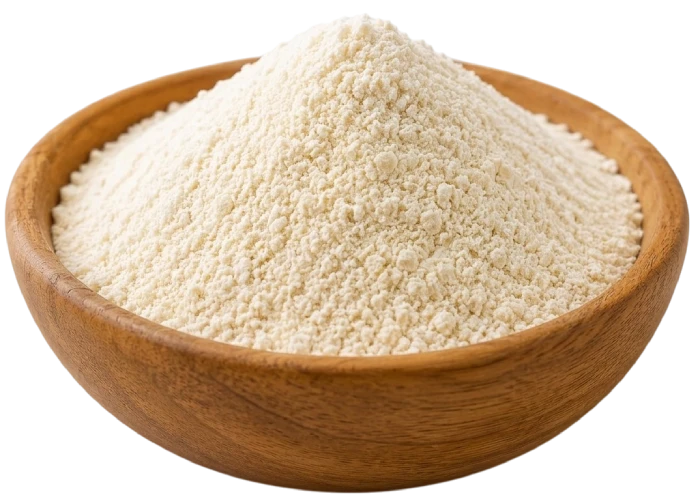
Guar seeds are processed and the endosperm is extracted to transform into gum powder, this product is termed as Guar Gum. It is also referred as guaran, guarkernmehl, goma guar, gomme guar, etc in different languages.
The seeds of this crop contain high low-shear viscosity when compared to other crops like locust bean and for this reason the extracted gum is applied as thickening and stabilizing agent in many applications.
This product is found to be a cost effective alternative for thickening, stabilizing, binding, emulsifying and plasticizing applications also. The high galactose-mannose ration makes it stay affluent for multiple functions.
Properties
Key Properties of Guar Gum:
- Superior Thickening Efficiency: Provides significantly higher thickening power than conventional ingredients such as corn starch, even at low concentrations.
- Excellent Water Binding Capacity: Rapidly hydrates in water to form highly viscous solutions and stable gels, improving texture and consistency.
- Crystal Inhibition: Helps minimize ice crystal formation, making it ideal for frozen foods and ice cream applications.
- Outstanding Stabilizing Performance: Enhances product stability, prevents ingredient separation, and extends shelf life.
- Versatile Functional Characteristics: Functions as an effective thickener, stabilizer, binder, emulsifier, and film-forming agent across various formulations.
- Sustainable Crop Source: Derived from a drought-tolerant crop that thrives in arid and semi-arid regions, making it an environmentally sustainable raw material.
- Wide Industrial Applications: An ideal ingredient for food, pharmaceuticals, cosmetics, oil drilling, paper, textiles, and many other industrial applications.
Agricultural Regions
- India is the world’s leading producer of guar, accounting for a major share of global guar seed cultivation. The crop is predominantly grown in the northwestern and central regions of the country, including Rajasthan, Gujarat, Haryana, and Madhya Pradesh.
- Guar thrives in sandy, well-drained soils and performs exceptionally well under arid and semi-arid climatic conditions. Its remarkable drought tolerance makes it highly suitable for regions with limited rainfall, enabling farmers to achieve consistent and high-quality seed yields.
- The favorable climate and extensive cultivation practices across these regions have established India as a reliable source of premium guar seeds for a wide range of food and industrial applications worldwide.
Nature and Processing of Guar Seeds
Guar seeds are naturally cream to pale yellow in color and possess a mild characteristic odor. The most valuable component of the seed is the endosperm, which is separated through a specialized milling process and further refined into a fine powder known as Guar Gum.
The production yield of Guar Gum is determined by extracting the endosperm from the processed guar beans. On average, approximately 29 kilograms of Guar Gum powder can be obtained from 100 kilograms of guar beans, depending on the quality and composition of the raw material.
Note: The actual yield may vary depending on seed quality, processing techniques, and endosperm content.
Manufacturing Excellence and Quality Assurance
The production of premium-quality Guar Gum Powder begins with the selection of superior guar seeds and the adoption of advanced processing technologies. Our manufacturing facilities are equipped with modern machinery and efficient processing systems that enable us to consistently produce high-grade Guar Gum tailored to the evolving requirements of global markets.
We follow stringent manufacturing practices to preserve the natural functional properties of guar while maintaining the highest standards of hygiene and product integrity. Every stage of production, from raw material selection and processing to extraction and final packaging, is carefully monitored to ensure contamination-free operations and consistent quality.
Our dedicated quality control team conducts comprehensive testing throughout the manufacturing process to ensure compliance with international quality standards.
Key quality parameters evaluated include:
- Acid Insoluble Residue (A.I.R.)
- Moisture Content
- Viscosity
- Ash Content
- Particle Size
- Color and Odor
- Protein Content
- Filterability
- Gum Content
- Fibre Content
- Granulation
- Insoluble Residue
- Fat Content
- pH Value
- Heavy Metals
- Arsenic and Lead Levels
In addition, our Food Grade Guar Gum undergoes rigorous microbiological testing to ensure product safety and purity. These tests include:
- Standard Plate Count (SPC)
- Yeast and Mould Count
- Salmonella
- Escherichia coli (E. coli)
- Coliforms
- Pseudomonas
- Staphylococcus Species
Through strict quality assurance procedures and continuous process monitoring, we deliver Guar Gum products that meet the highest standards of performance, safety, and reliability for food and industrial applications worldwide.
Specialty of Guar Endosperm
The guar seed endosperm is the primary source of Guar Gum and is valued for its exceptional thickening, stabilizing, binding, and water-retention properties. Its unique galactomannan structure provides excellent viscosity and functionality, making Guar Gum an indispensable ingredient across numerous industries.
Industries Benefiting from Guar Gum
Thanks to its versatile performance characteristics, Guar Gum is widely used in a broad range of applications, including:
- Food and Beverage Industry
- Confectionery and Bakery Products
- Pharmaceutical Industry
- Cosmetics and Personal Care
- Textile Industry
- Mining and Mineral Processing
- Petroleum and Oilfield Applications
- Drilling Fluids and Exploration Operations
- Water Treatment Systems
- Paper and Packaging Industry
- Animal Feed Applications
- Chemical and Industrial Formulations
The outstanding functionality of guar endosperm makes Guar Gum a reliable and cost-effective solution for industries seeking improved product performance, process efficiency, and formulation stability.
Health Benefits
The gum powder works efficiently in reducing blood glucose and lipid level.
Global Production of Cluster Beans
India is the world’s leading producer of cluster beans (guar), accounting for the majority of global production and serving as a key supplier of guar-based products to international markets. The crop is primarily cultivated in semi-arid and subtropical regions, where climatic conditions are highly favorable for achieving optimum yields.
Guar is generally grown during the monsoon season, with sowing carried out soon after the onset of the first rains. Its remarkable drought tolerance and adaptability make it an ideal crop for regions with limited water availability.
A guar seed consists of three main components: endosperm, germ, and husk. While the endosperm is processed into Guar Gum, the germ and husk are also utilized in various applications, including animal nutrition and industrial uses, ensuring maximum value from the crop.
Beyond its industrial significance, cluster bean is also consumed as a nutritious vegetable in many regions. Additionally, guar hay is used as a valuable livestock feed and is often blended with other fodder crops to enhance nutritional value.
The versatility and sustainable nature of guar cultivation have established cluster beans as an important agricultural commodity with wide-ranging food and industrial applications worldwide.